


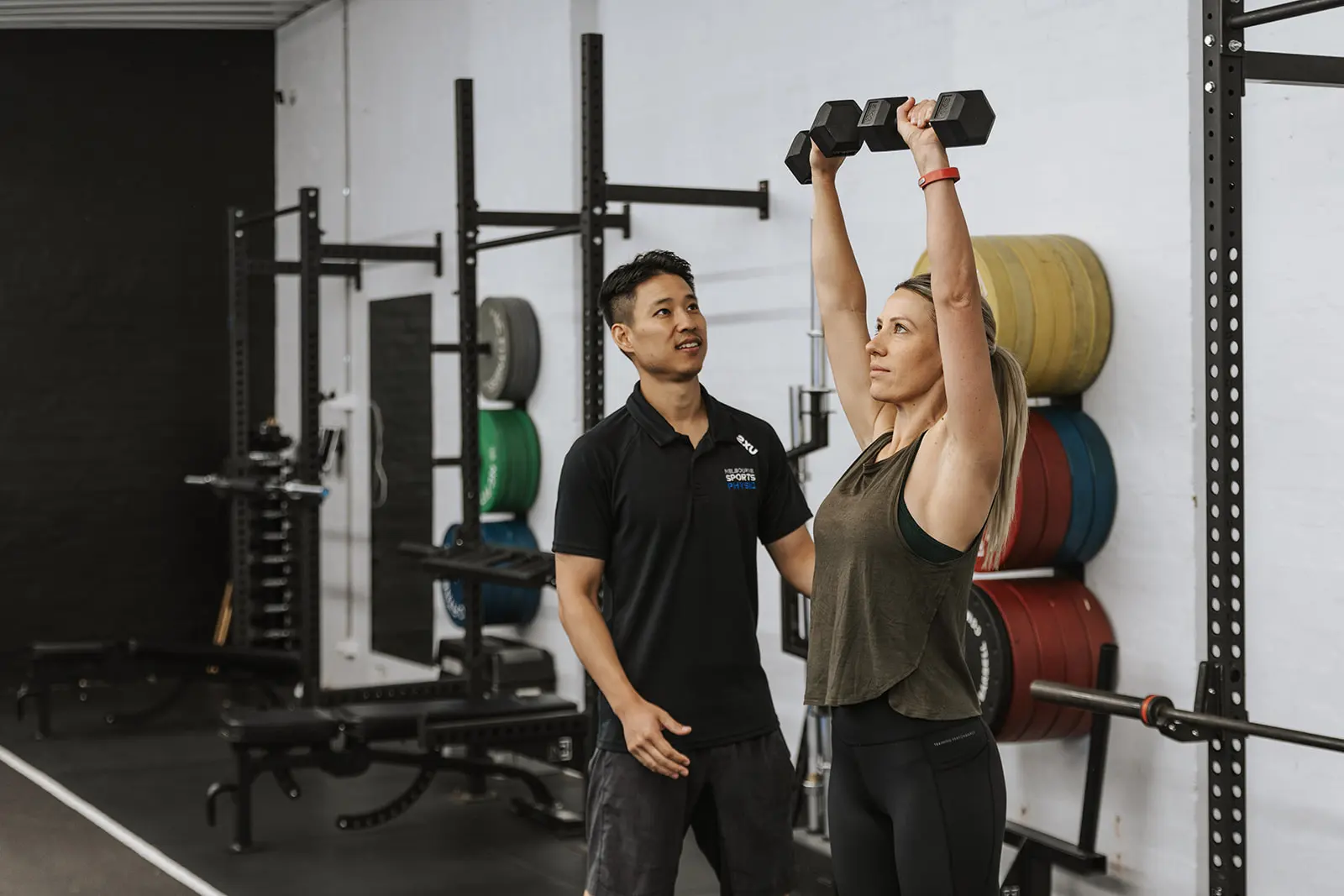
Shoulder injuries rarely appear out of nowhere.
For many athletes and active individuals, shoulder pain develops gradually over time. It may start as a slight ache after swimming laps, discomfort during a tennis serve, soreness following a gym session, or irritation after repeated overhead marking in AFL.
Initially, it's easy to ignore. But as the weeks go on, simple movements become more painful, performance starts to suffer, and training modifications become necessary.
The good news is that many shoulder injuries are preventable.
Research consistently shows that appropriate strengthening programs can improve shoulder function, increase resilience to sporting demands, and reduce injury risk.
Whether you're an AFL player, swimmer, tennis athlete, cricketer, or regular gym-goer, building strength around the shoulder complex can help keep you performing at your best.
In this article, we'll explore some of the most effective exercises used by a physio experienced in shoulder strengthening to help reduce injury risk and improve shoulder health.
Book Online Now to Fix Your Body
Why Shoulder Strength Matters
The shoulder is one of the most mobile joints in the human body.
While this mobility allows for powerful movements such as throwing, serving, swimming, and overhead lifting, it also means the shoulder relies heavily on muscular support for stability.
Several muscle groups work together to maintain shoulder function, including:
-
Rotator cuff muscles
-
Scapular stabilisers
-
Deltoids
-
Upper back muscles
-
Core and trunk muscles
When these muscles become weak, fatigued, or poorly coordinated, stress can increase on the shoulder joint and surrounding structures.
This may contribute to conditions such as:
-
Rotator cuff tendinopathy
-
Shoulder impingement
-
Shoulder instability
-
Labral irritation
-
Overuse injuries in overhead athletes
A well-designed strengthening program helps improve the shoulder's ability to tolerate sporting and training demands.
What our clients are saying about us
Common Sports That Place Stress on the Shoulder
Many sporting activities involve repetitive overhead movements or high-impact demands.
Some of the most common include:
AFL
Marking, tackling, handballing, and absorbing contact all place significant stress on the shoulder complex.
Swimming
Competitive and recreational swimmers perform thousands of overhead arm movements each week, making shoulder conditioning particularly important.
Tennis
The serve is one of the fastest movements in sport and requires exceptional shoulder strength and control.
Cricket
Fast bowlers, fielders, and batters all rely heavily on shoulder function for performance.
Gym Training
Bench pressing, overhead pressing, pull-ups, and Olympic lifting can all challenge shoulder stability and strength.
Why Physio Led Shoulder Strengthening Focuses on More Than Just the Rotator Cuff
One of the biggest misconceptions about shoulder injury prevention is that strengthening the rotator cuff alone is enough.
While the rotator cuff is important, successful injury prevention programs also address:
-
Scapular control
-
Thoracic spine mobility
-
Upper back strength
-
Movement mechanics
-
Training load management
The shoulder functions as part of a larger movement system. Focusing on only one muscle group may leave other important deficits unaddressed.
Exercise 1: External Rotation with Resistance Band
This is one of the most commonly prescribed rotator cuff exercises.
How to Perform It
-
Attach a resistance band to a fixed point.
-
Keep your elbow tucked against your side.
-
Rotate your forearm away from your body.
-
Slowly return to the starting position.
Benefits
This exercise strengthens the external rotators of the shoulder, which play an important role in shoulder stability during throwing, swimming, and overhead activities.
Suggested Dosage
-
2 to 3 sets
-
10 to 15 repetitions
-
Book Online Now to Fix Your Body
Exercise 2: Scapular Retractions
Strong scapular muscles provide a stable foundation for shoulder movement.
How to Perform It
-
Stand or sit upright.
-
Gently pull your shoulder blades back and down.
-
Hold briefly before relaxing.
Benefits
This exercise helps improve posture, shoulder mechanics, and muscular endurance.
Suggested Dosage
-
2 to 3 sets
-
10 to 15 repetitions
Exercise 3: Face Pulls
Face pulls are highly effective for strengthening the upper back and posterior shoulder muscles.
How to Perform It
-
Attach a resistance band or cable at face height.
-
Pull toward your face while keeping your elbows elevated.
-
Squeeze your shoulder blades together.
Benefits
Face pulls target muscles that are often underdeveloped in athletes who perform large amounts of pressing exercises.
Suggested Dosage
-
2 to 4 sets
-
10 to 15 repetitions
-
Book Online Now to Fix Your Body
Exercise 4: Serratus Wall Slides
The serratus anterior is a key stabilising muscle that is often overlooked.
How to Perform It
-
Place your forearms against a wall.
-
Slowly slide your arms upward.
-
Maintain gentle pressure into the wall throughout the movement.
Benefits
Improved scapular control can help reduce excessive stress on the shoulder joint during overhead movements.
Suggested Dosage
-
2 to 3 sets
-
8 to 12 repetitions
Exercise 5: Dumbbell Shoulder Press
Once adequate control and strength have been developed, more functional strengthening exercises can be introduced.
How to Perform It
-
Hold dumbbells at shoulder height.
-
Press overhead in a controlled manner.
-
Lower slowly.
Benefits
Develops strength through larger movement ranges while challenging shoulder stability.
Suggested Dosage
-
3 sets
-
8 to 12 repetitions
Proper technique is essential to minimise unnecessary stress on the shoulder.
Book Online Now to Fix Your Body
Exercise 6: Farmer's Carries
Farmer's carries are often overlooked despite their excellent carryover to sporting performance.
How to Perform It
-
Hold a weight in one or both hands.
-
Walk with controlled posture.
-
Keep the shoulders level throughout.
Benefits
Improves shoulder stability, grip strength, trunk control, and overall resilience.
Suggested Dosage
-
20 to 40 metres
-
3 to 5 rounds
Exercise 7: Push-Up Plus
This exercise combines traditional pushing strength with serratus anterior activation.
How to Perform It
-
Complete a standard push-up.
-
At the top, push slightly further by rounding the upper back.
-
Return to the starting position.
-
Benefits
Improves shoulder stability and control during pushing movements.
Suggested Dosage
-
2 to 4 sets
-
8 to 15 repetitions
-
Book Online Now to Fix Your Body
How Often Should You Perform Shoulder Strengthening Exercises?
The ideal frequency depends on your goals, training history, and current symptoms.
For general injury prevention, many athletes benefit from:
-
Two to three strengthening sessions per week
-
Progressive increases in resistance over time
-
Adequate recovery between sessions
More is not always better.
Excessive volume without sufficient recovery may contribute to overload, particularly in sports such as swimming, tennis, and cricket where the shoulder is already exposed to high training demands.
Should You Exercise Through Shoulder Pain?
This is one of the most common questions athletes ask.
The answer depends on the nature and severity of the pain.
Mild discomfort during strengthening exercises may be acceptable in some situations. However, sharp pain, worsening symptoms, night pain, or ongoing loss of function should be assessed by a physiotherapist.
A thorough assessment helps identify whether symptoms are related to tendon irritation, instability, joint pathology, muscle weakness, or movement dysfunction.
The Role of a Physio in Shoulder Strengthening
A physiotherapist does far more than simply provide a list of exercises.
Assessment may include:
-
Strength testing
-
Range of motion assessment
-
Sport-specific movement analysis
-
Training load review
-
Return-to-sport planning
This allows exercises to be tailored to the individual's needs, goals, and sporting demands.
For example, a swimmer's program may differ significantly from a tennis player's rehabilitation plan, while an AFL athlete may require different progressions compared to a gym enthusiast.
If you're looking to improve shoulder function, reduce injury risk, or manage ongoing symptoms, Melbourne Sports Physio's shoulder injury and rehabilitation resources can provide further information on assessment and treatment options.
Book Online Now to Fix Your Body
Frequently Asked Questions
What Is the Best Exercise for Shoulder Injury Prevention?
There is no single best exercise.
The most effective programs typically combine rotator cuff strengthening, scapular control exercises, upper back strengthening, and functional movement training.
Can Shoulder Strengthening Prevent Rotator Cuff Injuries?
Research suggests strengthening programs can reduce injury risk by improving the shoulder's ability to tolerate load and maintain stability during movement.
How Long Does It Take to Improve Shoulder Strength?
Many people notice improvements within six to eight weeks of consistent training, although this varies depending on starting strength levels and training frequency.
Are Resistance Bands Effective for Shoulder Strengthening?
Yes.
Resistance bands are commonly used by physiotherapists because they allow progressive loading while placing relatively low stress on the joints.
Should Athletes Perform Shoulder Exercises During the Season?
In most cases, yes.
Maintaining shoulder strength throughout the season can help preserve function and reduce injury risk, although exercise volume may need to be adjusted around competition schedules.
Book Online Now to Fix Your Body
Final Thoughts
Strong shoulders are not built by chance.
Whether you're competing in AFL, swimming, tennis, cricket, or simply training regularly in the gym, targeted strengthening exercises can play an important role in reducing injury risk and improving long-term performance.
The most effective injury prevention programs focus on more than just the rotator cuff. They develop strength, stability, coordination, and resilience throughout the entire shoulder complex.
If you're experiencing shoulder pain, returning from injury, or looking to optimise your training, seeking advice from a physio experienced in shoulder strengthening can help ensure your program is tailored to your individual needs.
For personalised assessment and rehabilitation, you can book an appointment with Melbourne Sports Physio. Their team can help you develop a shoulder strengthening program designed to support your goals and keep you performing at your best.
Book online today to feel great & move well again!
Super Simple with Instant Confirmation & No Login Required!
For consultation fees and more information, please visit our Fees and FAQs page or call us on 03 9498 0205.
Some types of consultations may require pre-payment or a deposit. 100% Money Back Guarantee (T&Cs apply).
Learn how our Melbourne Sports Physio team can help you?
At Melbourne Sports Physiotherapy our goal is to get you moving pain free as soon as possible.
But, we also want you to actually move better and live a healthier, more active and fulfilling life!
If your sports, fitness training or work has been wearing your body down, book in with one of our expert massage therapists so we can help you reduce your pain or stiffness.
If you are showing some signs of this condition or simply want help prevent this from happening in the future then book in with one of our highly experienced Remedial Massage Therapists today!
You can make an appointment by calling or booking online.