


Netball Physio Melbourne: Gold Standard Care for Court Athletes
Experts in sports physio for all injuries across Melbourne
Netball is a high-velocity, high-impact sport that places extraordinary demands on the lower limbs.
The "sudden stop" rule, combined with frequent vertical jumping and rapid pivoting, creates a unique biomechanical profile for every player.
At Melbourne Sports Physiotherapy, we provide gold standard physio netball care to athletes of all levels.
Whether you are an aspiring player looking at elite pathways like the giants netball physio programmes or a social player in a local weeknight competition, our goal is to keep you on the court.
Our team understands that netballers aren't just "runners"—they are court athletes who require specific landing stability, reactive agility, and explosive power.
We offer targeted netball injury treatment across our Melbourne clinics to help you recover from acute trauma and prevent future setbacks.
Sports physio is what we do best!
Common Injuries in Netball: Understanding the Risk
Netball has one of the highest rates of lower-limb injuries in Australian sport.
Due to the high-friction nature of the court and the deceleration required during play, certain patterns of injury are frequently seen by our netball physio team.
The 6 most common netball injuries we manage include:
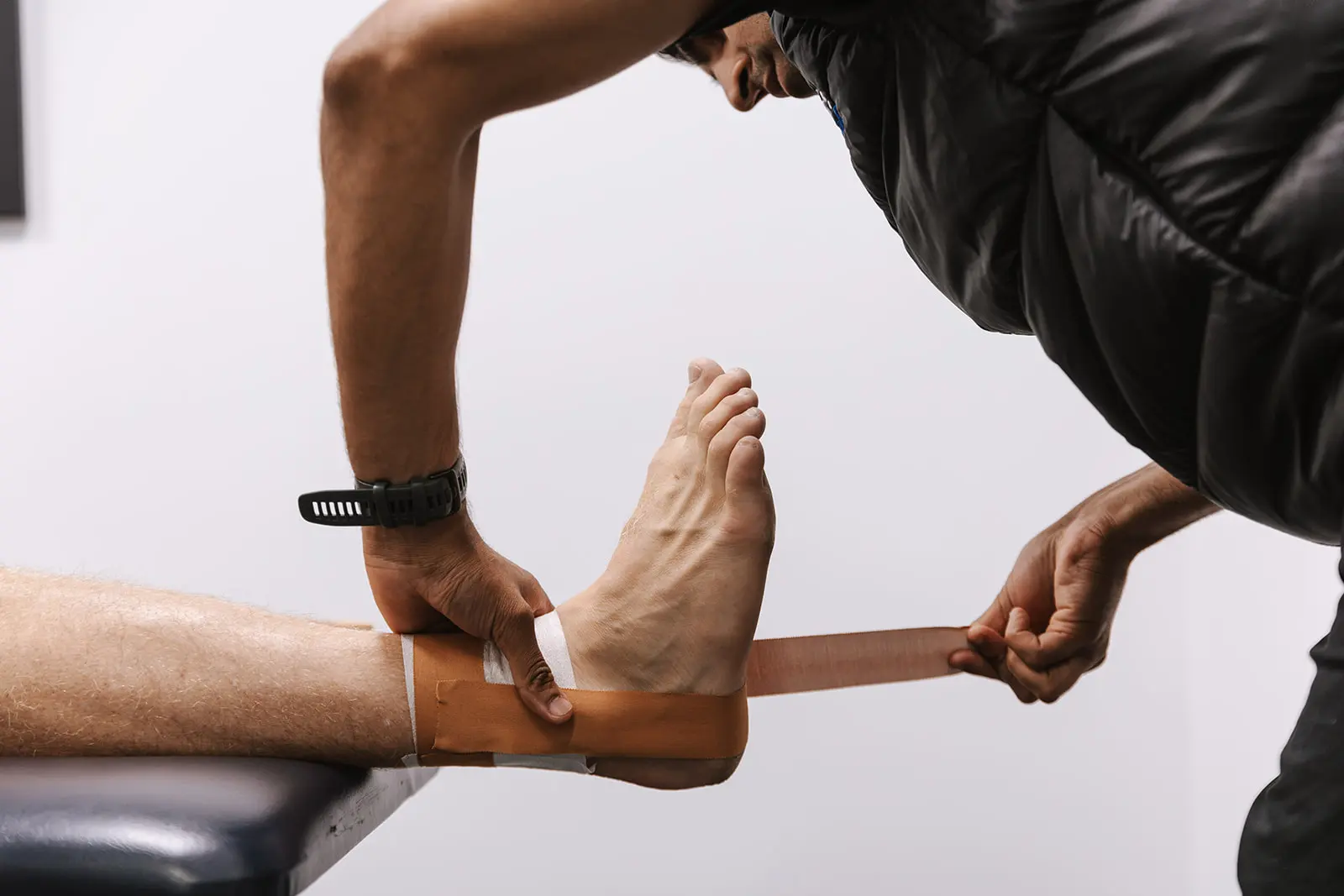
- Ankle Sprains: Often caused by landing on another player’s foot or an awkward roll during a pivot.
- ACL Injuries in Netball: Significant ligament tears usually resulting from non-contact twisting or poor landing mechanics.
- Patellofemoral Pain (Netball Knee): Persistent aching around the kneecap due to repetitive jumping and landing.
- Shin Splints: Medial tibial stress syndrome common during the high-volume pre-season period.
- Finger Injuries in Netball: Dislocated joints or "mallet finger" caused by high-velocity ball impact.
- Calf and Achilles Strains: Soft tissue injuries during explosive "take-off" movements.
Specialist Netball Injury Treatment & Rehabilitation
Effective netball injury treatment requires a shift away from "total rest." At Melbourne Sports Physiotherapy, we use an active rehabilitation model.
Once we have managed the initial inflammation and pain, we move quickly into restoring the specific functional movements required for your position.
For example, a Goal Shooter requires different landing stability compared to a Centre who is constantly driving and pivoting.
Our netball injuries protocols are bespoke, ensuring your rehab matches the "load profile" of your role.
We utilise hands-on manual therapy to restore joint mobility, complemented by a structured strengthening programme that targets the hips, knees, and ankles.
Managing Netball Knee and Ankle Injuries
The "Netball Knee" is a term often used to describe various conditions, with a netball knee injury typically involving the ACL, meniscus, or kneecap tracking.
Because female athletes are statistically more prone to ACL tears, we take a proactive approach to knee health.
Knee injuries from netball often stem from a "valgus" landing position—where the knee caves inward upon impact.
Our physios use video analysis to identify these movement patterns early. By correcting your landing mechanics, we can significantly reduce the force placed on the ACL.
We also pay close attention to finger injuries in netball.
While often viewed as "minor," a poorly managed finger dislocation can lead to permanent stiffness or deformity.
Physiotherapy for other sports injuries
At Melbourne Sports Physiotherapy, we don’t just treat AFL-related injuries, we support athletes across a wide range of sporting backgrounds, including:
-
Netball
-
Swimming
-
Calisthenics
-
Jogging/Running/ Athletics
-
Hockey
-
Gymnastics
In addition to looking after all of your sports, Melbourne Sports Physiotherapy's team are excellent at treating common sports injuries and strains.
How to Prevent Netball Injuries: Our Performance Screening
Prevention is the most effective way to stay on the court. We are big believers in the Netball Australia KNEE program, and we have integrated these evidence-based principles into our own injury screening Melbourne protocols.
If you want to know how to prevent netball injuries, our performance screening is the answer. We use VALD ForceDecks to measure your landing impact and identify any side-to-side imbalances. If your left leg is absorbing 20% more force than your right during a jump, that is a red flag for a future injury. Our knee netball for physios expertise allows us to prescribe specific "pre-hab" exercises to balance these forces before an injury occurs.
To book an appointment with one of Melbourne Sports Physiotherapy's sports physios, please Book Online or call the Essendon , St Kilda, Malvern East or Blackburn clinics.
Frequently Asked Questions
When should I see a netball physio after an ankle sprain?
You should ideally be assessed within 24 to 48 hours. Early assessment allows us to rule out fractures and start a "protected loading" programme. Waiting weeks for the swelling to go down often leads to joint stiffness and a much longer recovery time.
Can I play netball with a finger splint?
This depends on the type of injury and the rules of your specific league. Most social and competitive leagues allow "soft" splints or taping, but hard plastic or metal splints are often banned for safety reasons. We can provide custom-moulded thermoplastic splints that are often more acceptable and functional.
What is the most common netball injury?
Statistically, the lateral ankle sprain is the most frequent injury. However, ACL tears are the most "significant" in terms of time lost from the sport. Our programmes are designed to address both the high-frequency minor injuries and the low-frequency major ones.
Do I need a referral for netball injury treatment in Melbourne?
No. You do not need a referral to see our sports physiotherapists. You can book directly online or call any of our clinics to secure an appointment with a clinician who has a special interest in netball.