


September 2026
Bethany Robson, Physiotherapist
Bowler's Back: How Fast Bowlers Can Prevent and Manage Lower Back Pain
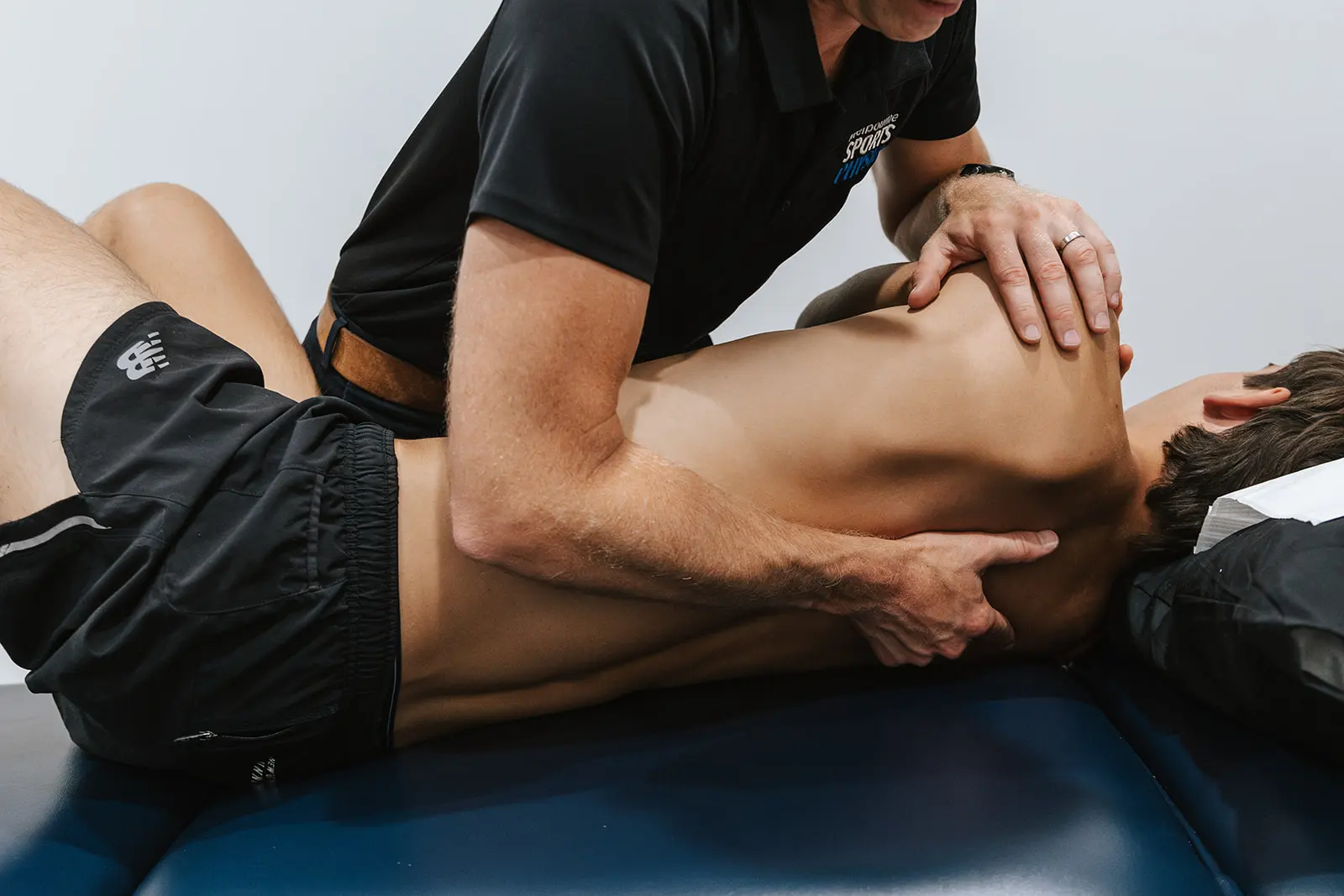
Fast bowling is one of the most physically demanding roles in cricket. Every delivery combines a high-speed run-up, a powerful jump, rapid rotation and a forceful delivery before the bowler has to repeat the movement again and again.
It is therefore not surprising that lower back pain in fast bowlers is a common concern. Research identifies lumbar spine injuries as a significant source of missed playing time in cricket, while Australian Cricket highlights lower-back bone stress injuries as one of the most serious concerns for young pace bowlers.
The good news is that there are practical ways to reduce your risk, manage symptoms early and build your body to better tolerate the demands of fast bowling.
Book Online Now to Fix Your Body
Why does fast bowling cause back pain?
The fast bowling action places considerable force through the lower back.
As you run towards the crease, jump into your delivery stride and release the ball, your lower back is exposed to a combination of compression, bending and rotation. Research has demonstrated high forces during fast bowling, while the exact relationship between bowling technique and injury is still being investigated.
The problem is rarely one delivery.
Instead, it is often the repeated exposure to these forces over weeks, months and years that can become an issue, particularly when your body has not had enough time to recover.
This is why bowling workload, recovery, physical preparation and individual factors all need to be considered when managing a fast bowler's back.
What our clients are saying about us

What is "bowler's back"?
"Bowler's back" is not a specific medical diagnosis. It is a general term often used to describe lower back pain or injury associated with bowling.
For some bowlers, symptoms may be related to muscles and joints around the lower back. For others, particularly young fast bowlers, persistent pain may be associated with a bone stress injury in the lumbar spine.
These injuries can develop gradually and may initially cause relatively little pain. This is particularly important for adolescent pace bowlers, whose growing bones are more vulnerable to repeated loading. Australian Cricket notes that young pace bowlers are at the highest risk of lumbar bone stress injuries.
This means persistent lower back pain in a fast bowler should not simply be treated as normal muscle soreness.
How can fast bowlers prevent lower back pain?
1. Manage your bowling workload
One of the most important strategies is avoiding sudden increases in bowling.
A common example is a player who has had several weeks away from cricket during the off-season and returns to training by bowling a large number of overs immediately.
Your cardiovascular fitness may feel good, but your bones, muscles and other tissues may not yet be prepared for the repeated stress of bowling.
Instead, build your bowling volume progressively.
This is particularly important when returning from injury, returning after an off-season or moving into a higher level of cricket.
Australian Cricket recommends structured workload management for junior pace bowlers, including limits on consecutive bowling days, weekly bowling days and overs per spell.
2. Build strength away from the cricket field
Fast bowlers need more than a strong lower back.
A well-rounded strength program can help develop the physical qualities required to run, jump, land, rotate and repeatedly deliver the ball.
Useful areas to develop may include:
-
Leg strength
-
Hip strength
-
Trunk strength
-
Calf strength
-
Single-leg control
-
General upper-body strength
The goal is not simply to strengthen one body part because it hurts. Instead, your program should develop your overall capacity to handle the demands of fast bowling.
A physiotherapist or strength and conditioning professional can help identify areas that need attention and develop a program around your individual needs.
Book Online Now to Fix Your Body
3. Give your body time to recover
More bowling is not always better bowling.
Recovery allows your body to adapt to training. If you repeatedly bowl while fatigued, your technique may change and your ability to control your movement may decline.
Make sure your training schedule includes appropriate recovery between bowling sessions.
This is particularly important for junior players, who may be balancing school cricket, club cricket, representative cricket and additional bowling sessions.
Remember that all bowling counts towards your workload. Training overs and match overs should not be considered separately.
4. Prepare before increasing intensity
If you are returning to cricket after a break, do not wait until the first match to test whether your body is ready for full-speed bowling.
Use training to gradually build towards the demands of competition.
Your preparation might progress from lower-intensity bowling to longer spells and eventually match-specific intensity.
Australian Cricket recommends a gradual pre-season build-up so bowlers can approach the expected demands of the season progressively rather than making a sudden jump.
Book Online Now to Fix Your Body
Does bowling technique cause back pain?
Technique can influence the forces placed on the body, but it is important not to oversimplify the issue.
Research has investigated factors such as bowling action, spinal movement and shoulder rotation, but a 2023 systematic review found that evidence linking specific individual characteristics and techniques with lower back injury is inconsistent.
This means there is no single "perfect" bowling technique that guarantees you will avoid injury.
Instead, technique should be considered alongside workload, physical capacity, previous injury, fatigue and other individual factors.
If you are experiencing recurrent pain, a physiotherapist can assess your bowling-related movement and determine whether changes to your training or technique may be appropriate.
What should you do if you develop lower back pain?
Do not simply try to bowl through it.
If pain repeatedly appears during bowling, becomes worse as you continue or remains after training, it is worth getting assessed.
This is especially important for young fast bowlers.
Australian Cricket specifically recommends that junior pace bowlers experiencing lower back pain while bowling stop bowling and see a sports doctor or physiotherapist experienced in managing these injuries before returning to bowling.
Early assessment can help identify what may be contributing to your symptoms and determine whether you need to temporarily modify your training.
Book Online Now to Fix Your Body
How is fast bowler back pain treated?
Treatment depends on the cause of the pain.
For less serious muscular or movement-related problems, treatment may involve modifying your bowling workload, improving strength, addressing contributing factors and gradually rebuilding your capacity.
If a bone stress injury is suspected, management is different and may require a period away from bowling followed by a carefully structured rehabilitation program.
The important point is that pain relief is only one part of rehabilitation.
Before returning to full bowling, you need to rebuild your ability to tolerate the demands of the sport.
This may involve progressing from general strength exercises to running, jumping, bowling drills and eventually full-speed spells.
When should a fast bowler see a physiotherapist?
Consider seeing a physiotherapist if you:
-
Have recurring lower back pain when bowling
-
Experience pain that is getting worse
-
Have pain that persists after training
-
Have recently returned from a back injury
-
Are increasing your bowling workload
-
Are unsure how quickly to return to bowling
-
Want to improve your physical preparation for the season
A physiotherapist can assess your symptoms, strength, movement and training history, then help develop a return-to-bowling plan that matches your current capacity.
Book Online Now to Fix Your Body
Keep bowling by preparing your body
Fast bowling will always place significant demands on the body. The goal is not to eliminate every force involved in the bowling action.
Instead, the aim is to build a body capable of handling those forces and manage your exposure to them intelligently.
Progress your workload gradually, develop your strength, allow adequate recovery and take persistent lower back pain seriously.
For young fast bowlers in particular, early management is important. Lower back pain should not simply be accepted as part of playing cricket.
With appropriate preparation and guidance, bowlers can build the physical capacity needed to perform at their best while giving themselves the best opportunity to enjoy a long and healthy cricket career.
Book online today to feel great & move well again!
Super Simple with Instant Confirmation & No Login Required!
For consultation fees and more information, please visit our Fees and FAQs page or call us on 03 9498 0205.
Some types of consultations may require pre-payment or a deposit. 100% Money Back Guarantee (T&Cs apply).
Learn how our Melbourne Sports Physio team can help you?
At Melbourne Sports Physiotherapy our goal is to get you moving pain free as soon as possible.
But, we also want you to actually move better and live a healthier, more active and fulfilling life!
If your sports, fitness training or work has been wearing your body down, book in with one of our expert massage therapists so we can help you reduce your pain or stiffness.
If you are showing some signs of this condition or simply want help prevent this from happening in the future then book in with one of our highly experienced Remedial Massage Therapists today!
You can make an appointment by calling or booking online.