


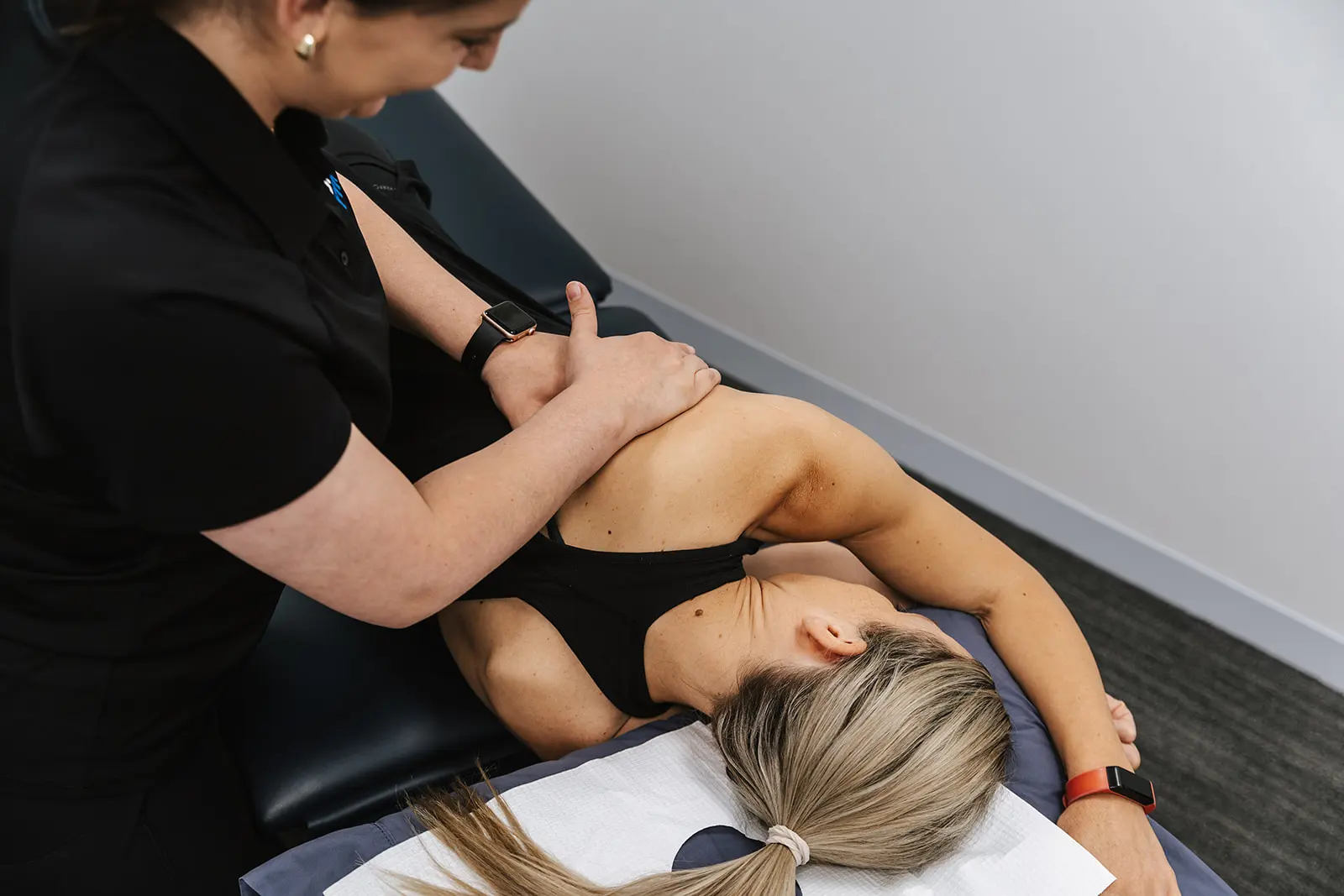
The shoulder is one of the most mobile joints in the body. Because it relies heavily on muscles and soft tissue for stability, small changes in movement patterns can create clicking, popping, or grinding sensations.
In many cases, shoulder clicking occurs because tendons or muscles move over bony structures during arm movement. Sometimes this is painless and harmless. Other times, it may indicate irritation, instability, or tissue damage.
Common causes include:
-
Rotator cuff irritation
-
Shoulder instability (Multi-directional instability)
-
Muscle tightness
-
Labral irritation
-
Scapular dysfunction
-
Tendon inflammation
-
Poor posture
-
Joint hypermobility
The important thing is not just whether your shoulder clicks, but whether the clicking is associated with pain, weakness, stiffness, or instability.
Book Online Now to Fix Your Body
Common Symptoms That May Accompany Shoulder Clicking
Not all shoulder clicking needs treatment. However, certain symptoms may indicate an underlying issue requiring physiotherapy assessment.
Signs to watch for include:
-
Pain during overhead movement
-
Weakness when lifting objects
-
Feeling like the shoulder may “slip out”
-
Reduced shoulder mobility
-
Night pain
-
Pain during gym exercises
-
Clicking combined with sharp pain
-
Shoulder fatigue during sport or work
If symptoms continue for more than a few weeks, it’s important to address the issue early before compensation patterns and chronic irritation develop.
What our clients are saying about us

Shoulder Pain Physio Melbourne: Why Modern Lifestyles Contribute to Shoulder Problems
People searching for Shoulder Pain Physio Melbourne are often dealing with issues caused by repetitive movement patterns, desk work, poor posture, and training overload.
In Melbourne, shoulder problems are especially common among:
-
Office workers
-
Weightlifters
-
Swimmers
-
Tennis players
-
Tradies
-
CrossFit athletes
-
Golfers
One major issue many blogs fail to discuss is the role of thoracic spine stiffness. When the upper back becomes stiff from prolonged sitting, the shoulder often compensates by moving excessively. Over time, this places additional strain on the rotator cuff and surrounding tissues.
Another overlooked factor is scapular control. The shoulder blade plays a critical role in shoulder stability. Poor scapular mechanics can lead to altered movement patterns and increased joint stress, particularly when moving overhead.
This is why physiotherapy focuses on the entire movement chain rather than simply treating the painful area.
When Shoulder Clicking Is Usually Harmless
In some cases, shoulder clicking is completely normal.
Painless clicking without weakness or restriction may simply occur because:
-
Tendons move over bone
-
Gas bubbles release within the joint
-
Ligaments shift during movement
-
The shoulder is naturally hypermobile
Many athletes experience occasional joint noise without any injury present.
Generally, harmless clicking:
-
Is not painful
-
Does not worsen over time
-
Does not limit movement
-
Is not associated with instability
However, if symptoms change or pain develops, assessment is recommended.
Book Online Now to Fix Your Body
Shoulder Pain Physio Melbourne: Signs You Should See a Physiotherapist
There are several situations where physiotherapy assessment is strongly recommended.
You should consider seeing a physiotherapist if:
-
Clicking becomes painful
-
Your shoulder feels unstable
-
Movement becomes restricted
-
You experience weakness
-
Symptoms affect sleep
-
Pain interferes with sport or work
-
Symptoms continue for more than 2–3 weeks
For people searching Shoulder Pain Physio Melbourne, physiotherapy can help identify whether symptoms are related to muscle imbalance, instability, tendon irritation, posture, or joint dysfunction.
Early treatment often prevents small issues from progressing into more significant injuries.
Book Online Now to Fix Your Body
How Physiotherapy Helps Shoulder Clicking and Popping
Physiotherapy aims to identify the underlying reason your shoulder is clicking and restore healthy movement mechanics.
Assessment may include:
-
Shoulder strength testing
-
Range of motion assessment
-
Postural analysis
-
Scapular control evaluation
-
Thoracic mobility testing
-
Rotator cuff assessment
Treatment is then tailored to the individual.
1. Reducing Pain and Irritation
If inflammation or tendon irritation is present, early treatment focuses on calming the shoulder.
This may involve:
-
Activity modification
-
Soft tissue therapy
-
Manual therapy
-
Load management strategies
Reducing irritation allows the shoulder to tolerate movement more effectively.
Book Online Now to Fix Your Body
2. Improving Shoulder Stability
Many clicking shoulders involve poor muscular control.
Rehabilitation often focuses on:
-
Rotator cuff strengthening
-
Scapular stability
-
Shoulder endurance
-
Motor control exercises
Improving stability helps reduce excessive joint movement and mechanical stress.
3. Restoring Mobility
Restricted movement in the thoracic spine or shoulder capsule can contribute to abnormal shoulder mechanics.
Physiotherapy may include:
-
Thoracic mobility exercises
-
Stretching techniques
-
Shoulder mobilisation
-
Postural correction exercises
Restoring mobility helps the shoulder move more efficiently.
Book Online Now to Fix Your Body
4. Correcting Movement Patterns
One of the biggest reasons shoulder pain returns is because movement habits are never corrected.
Physiotherapy can help improve:
-
Gym lifting technique
-
Overhead mechanics
-
Workplace posture
-
Sporting movement patterns
Addressing these factors helps reduce recurrence risk.
Shoulder Pain Physio Melbourne: Exercises That May Help
People searching for Shoulder Pain Physio Melbourne are often looking for exercises they can safely perform at home.
Commonly prescribed exercises may include:
-
Isometric shoulder holds
-
Banded rotator cuff work
-
Wall slides
-
Scapular retraction exercises
-
Serratus anterior activation drills
-
Thoracic extension and rotation mobility exercises
However, exercises should always be individualised. Incorrect loading or poor technique can worsen symptoms.
A physiotherapist can guide you through the appropriate progressions based on your symptoms and goals.
Book Online Now to Fix Your Body
Could Shoulder Clicking Mean a Tear?
Sometimes shoulder clicking is associated with structural issues such as:
-
Labral tears
-
Rotator cuff tears
-
Shoulder instability
-
Cartilage irritation
However, imaging findings do not always correlate with pain levels. Research shows many people have structural changes visible on scans without symptoms.
This is why clinical assessment is important. Treatment decisions should not rely solely on imaging.
Physiotherapy is often recommended as the first-line treatment before considering more invasive options.
Recovery Timelines: How Long Does It Take?
Recovery depends on:
-
The underlying cause
-
Severity of symptoms
-
Consistency with rehabilitation
-
Activity levels
-
Shoulder stability
General recovery timelines may include:
-
Mild irritation: 2–6 weeks
-
Tendon-related pain: 6–12 weeks
-
Instability rehabilitation: Several months
Consistency is one of the most important factors in long-term recovery.
Book Online Now to Fix Your Body
Tips to Prevent Shoulder Clicking and Pain
Preventative strategies include:
-
Strengthening shoulder stabilisers
-
Improving posture
-
Adequate warm up techniques pre training
-
Improving thoracic mobility
-
Avoiding rapid increases in training load
-
Taking regular movement breaks from desk work
Sleep and recovery also play an important role in tissue healing and pain management.
Why Ignoring Shoulder Symptoms Can Lead to Bigger Problems
Many people assume shoulder clicking is something they simply need to live with.
However, ignoring symptoms can sometimes lead to:
-
Chronic tendon irritation
-
Reduced shoulder strength
-
Increased instability
-
Compensatory neck pain
-
Progressive movement dysfunction
Addressing symptoms early often leads to better long-term outcomes and faster recovery.
Book Online Now to Fix Your Body
Shoulder Clicking & Popping Summary
Clicking or popping in the shoulder is common, but it shouldn’t always be ignored. While some joint noise is harmless, persistent clicking associated with pain, weakness, instability, or restricted movement may indicate an underlying issue that requires treatment.
Physiotherapy can help identify the root cause of shoulder symptoms, reduce pain, improve movement, and restore confidence in daily activities and sport.
If you’ve been searching for answers about Shoulder Pain Physio Melbourne, a personalised physiotherapy assessment can help determine the most effective treatment plan for your recovery goals.
Early treatment often prevents small problems from becoming long-term injuries, helping you return to work, training, and daily life with better shoulder function and less pain.
Book online today to feel great & move well again!
Super Simple with Instant Confirmation & No Login Required!
For consultation fees and more information, please visit our Fees and FAQs page or call us on 03 9498 0205.
Some types of consultations may require pre-payment or a deposit. 100% Money Back Guarantee (T&Cs apply).
Learn how our Melbourne Sports Physio team can help you?
At Melbourne Sports Physiotherapy our goal is to get you moving pain free as soon as possible.
But, we also want you to actually move better and live a healthier, more active and fulfilling life!
If your sports, fitness training or work has been wearing your body down, book in with one of our expert massage therapists so we can help you reduce your pain or stiffness.
If you are showing some signs of this condition or simply want help prevent this from happening in the future then book in with one of our highly experienced Remedial Massage Therapists today!
You can make an appointment by calling or booking online.