


August 2026
Bethany Robson, Physiotherapist
Golf Injuries Beyond the Back: Wrist, Elbow and Shoulder Pain in Golfers
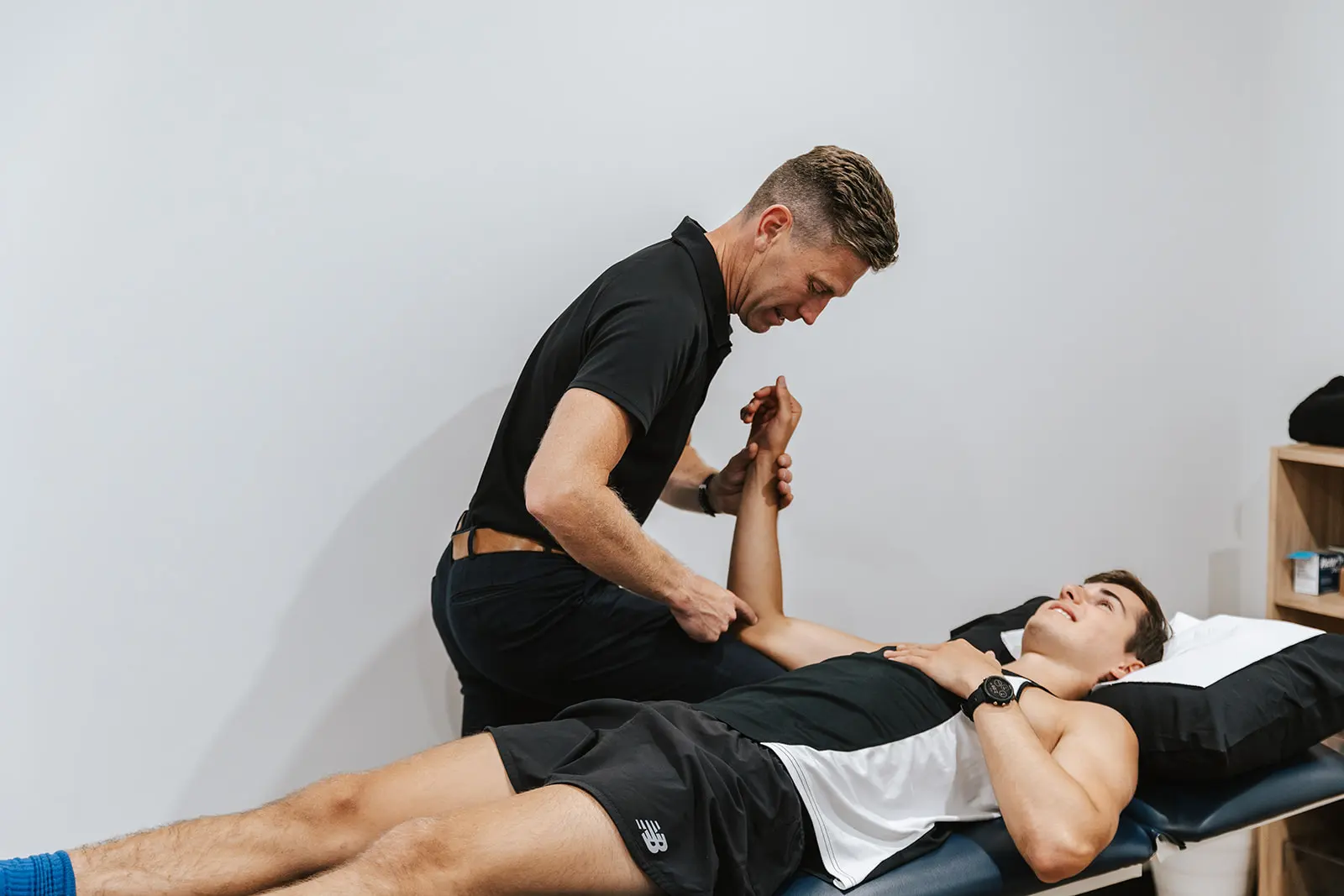
Golf is often considered a low-impact sport, but that does not mean golfers are immune to injury. The repetitive nature of the golf swing places significant demands on the body, particularly when playing regularly, increasing training volume or returning to golf after a break.
While lower back pain is one of the most recognised golf injuries, pain can also develop in the wrist, elbow and shoulder. These areas play an important role in controlling the club and generating speed throughout the swing.
Understanding the common causes of golf injuries can help you identify problems early and stay on the course.
Book Online Now to Fix Your Body
Wrist pain in golfers
The wrists play an important role in controlling the club throughout the golf swing. They are exposed to repeated bending, twisting and loading, particularly during impact with the ball.
Golf-related wrist pain can occur on either side of the wrist and may develop gradually or following a specific incident, such as hitting the ground heavily.
Common symptoms include:
-
Pain during or after playing golf
-
Wrist stiffness
-
Pain when gripping the club
-
Reduced grip strength
-
Swelling or tenderness
-
Pain when moving the wrist or forearm
Overuse is a common factor. Playing more rounds than usual, increasing practice sessions or repeatedly hitting from difficult lies can place additional stress on the wrist.
Poor technique can also contribute. However, wrist pain is not always caused by a problem with your swing. Previous injuries, reduced strength or mobility and suddenly increasing your golf workload can all play a role.
If wrist pain continues or affects your ability to grip the club, it is worth having it assessed rather than simply playing through it.
What our clients are saying about us
Elbow pain and golfer's elbow
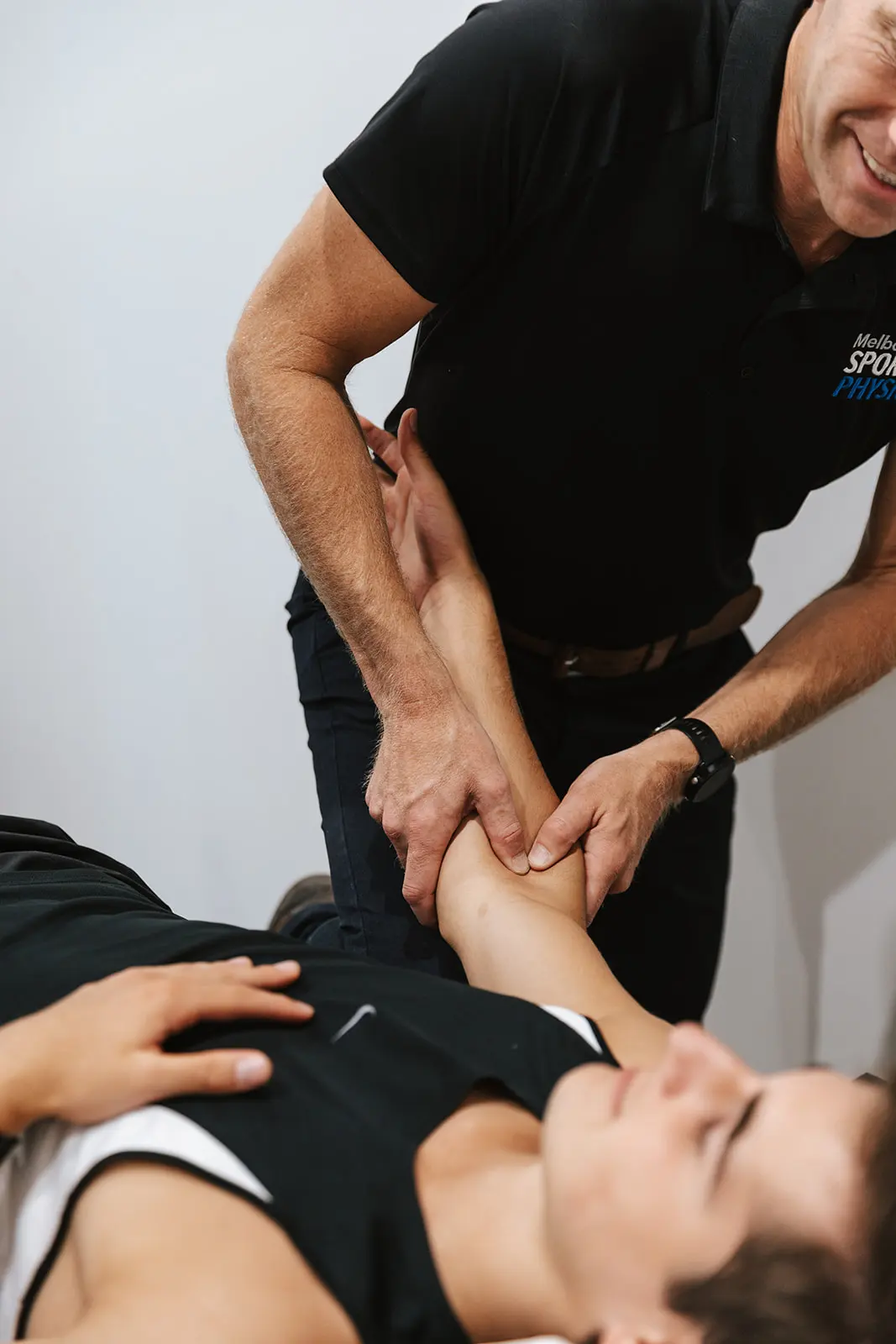
Elbow pain is another common problem among golfers. One of the conditions often associated with golf is golfer's elbow, which causes pain around the inside of the elbow.
Despite its name, you do not need to be a professional or frequent golfer to develop it.
Golfer's elbow is generally associated with repeated loading of the muscles and tendons that control the wrist and hand. The repetitive nature of gripping and swinging a golf club can place increased stress on these tissues.
You may notice:
-
Pain on the inside of the elbow
-
Pain when gripping the club
-
Discomfort when lifting objects
-
Stiffness after playing
-
Tenderness around the elbow
Elbow pain can also occur for other reasons, so an accurate assessment is important.
Treatment usually focuses on gradually improving the elbow's ability to tolerate load. This may include specific strengthening exercises, modifying your golf workload and addressing factors that may be contributing to your symptoms.
The goal is not simply to reduce pain, but to build the strength and capacity needed to return to golf confidently.
Shoulder pain in golfers
The shoulder needs to move through a large range during the golf swing. It also needs to provide enough strength and control to repeatedly move the club at speed.
This combination of movement and force can make the shoulder susceptible to pain, particularly when golfers suddenly increase their playing or practice volume.
Shoulder pain may be noticed during the backswing, downswing or follow-through. Some golfers may also experience pain when reaching overhead or lying on the affected side.
Common symptoms include:
-
Shoulder pain during the golf swing
-
Pain reaching overhead
-
Reduced shoulder movement
-
Weakness
-
Pain after playing
-
Difficulty sleeping comfortably on the affected shoulder
Shoulder problems can have many different causes, which is why it is important not to assume that all shoulder pain is simply due to "poor technique".
A physiotherapy assessment can help identify which movements are aggravating your symptoms and determine how the shoulder is responding to load.
Book Online Now to Fix Your Body
Why do golf injuries happen?
Golf injuries are often caused by a combination of factors rather than one single problem.
One of the biggest factors is load — essentially, how much stress you are asking your body to handle.
For example, you might normally play nine holes once a week but suddenly play three rounds over a weekend. Alternatively, you may begin spending several hours at the driving range in preparation for a competition.
Your golf swing may not have changed, but the amount of work your body is doing has.
Other factors that can contribute include:
-
Sudden increases in playing or practice volume
-
Previous injuries
-
Reduced strength or mobility
-
Poor recovery between sessions
-
Changes in technique
-
Inadequate warm-up
-
Equipment changes
-
Returning to golf too quickly after time away
This is why injury prevention is not simply about having a "perfect" golf swing.
Book Online Now to Fix Your Body
How can physiotherapy help golf injuries?
Physiotherapy can help golfers understand why their pain has developed and what they can do to return to golf safely.
Your physiotherapist may assess your strength, movement, flexibility and ability to tolerate different types of load. They can also look at how your symptoms respond to golf-specific movements.
Treatment may include:
-
Exercise to improve strength and control
-
Gradually increasing the amount of load your body can tolerate
-
Advice on modifying your golf activities
-
Mobility exercises where appropriate
-
Education about managing training and recovery
-
A structured return-to-golf program
In some cases, your physiotherapist may also recommend working with a golf professional if changes to your swing or technique may be contributing to your symptoms.
The aim is not necessarily to stop playing golf completely. In many cases, the better approach is to modify your activity while progressively rebuilding your capacity.
Preventing golf injuries
You do not need to avoid golf to reduce your risk of injury. Instead, focus on preparing your body for the demands of the game.
A consistent strength and conditioning program can help improve your ability to tolerate the repetitive demands of golf. Warming up before playing, gradually increasing your playing volume and allowing enough recovery between sessions can also help.
Most importantly, listen to early warning signs.
Pain that repeatedly appears during or after golf should not simply be ignored. Addressing symptoms early may help prevent a minor problem from becoming a more persistent injury.
Book Online Now to Fix Your Body
When should you see a physiotherapist?
If wrist, elbow or shoulder pain is affecting your golf swing, limiting your ability to play or continuing after you finish playing, it is worth getting assessed.
A physiotherapist can help determine what may be contributing to your symptoms and develop a treatment and exercise plan based around your goals.
Whether you are a weekend golfer, a regular club player or preparing for competition, the goal is the same: keep your body strong, manage your workload and enjoy golf without being held back by pain.
If golf-related wrist, elbow or shoulder pain is stopping you from playing at your best, a physiotherapy assessment can be a useful first step towards getting back on the course.
Book online today to feel great & move well again!
Super Simple with Instant Confirmation & No Login Required!
For consultation fees and more information, please visit our Fees and FAQs page or call us on 03 9498 0205.
Some types of consultations may require pre-payment or a deposit. 100% Money Back Guarantee (T&Cs apply).
Learn how our Melbourne Sports Physio team can help you?
At Melbourne Sports Physiotherapy our goal is to get you moving pain free as soon as possible.
But, we also want you to actually move better and live a healthier, more active and fulfilling life!
If your sports, fitness training or work has been wearing your body down, book in with one of our expert massage therapists so we can help you reduce your pain or stiffness.
If you are showing some signs of this condition or simply want help prevent this from happening in the future then book in with one of our highly experienced Remedial Massage Therapists today!
You can make an appointment by calling or booking online.