


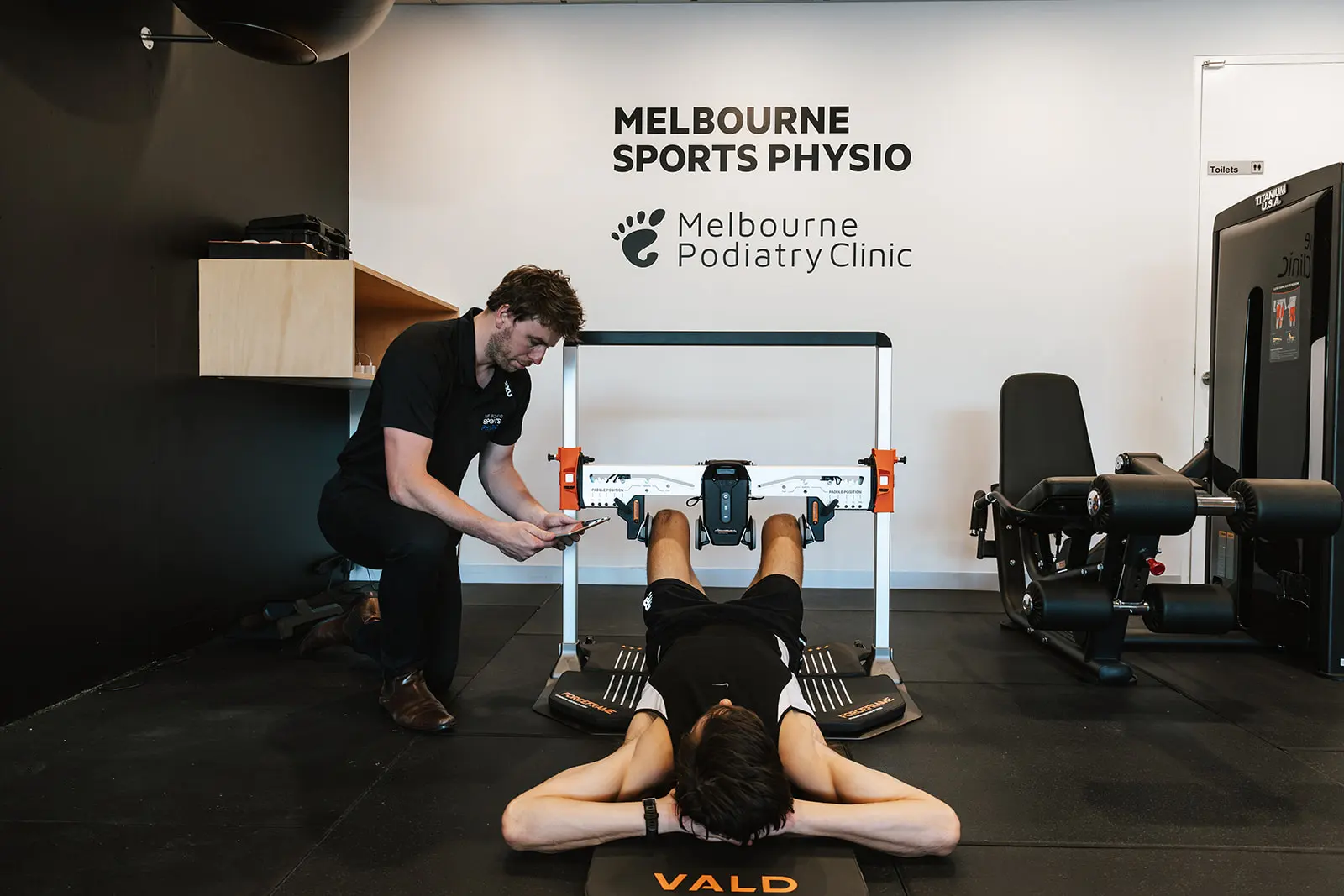
Hip pain can start quietly - a pinch getting out of the car, a dull ache during a walk, a sharp catch at the bottom of a squat that makes you hesitate for a second longer than usual. Sometimes, these little symptoms can spiral into uncertainty.
Do you stop training altogether? Push through it? Stretch more? Strengthen more? Everyone seems to have an opinion, and most of them contradict each other.
The reality is that training with hip pain isn’t about choosing between rest and exercise. It’s about understanding how your hip responds to load and making smarter decisions around it.
So let’s break down what’s actually safe, what to be cautious of, and how to keep moving without making things worse.
Book Online Now to Help Your Body
Can You Train With Hip Pain?
In most cases, yes—you can continue training with hip pain. What matters is not whether you have pain, but how that pain behaves.
One of the most important shifts in thinking is understanding that pain does not always equal damage. Pain is influenced by sensitivity in the tissues, recent activity levels, sleep, stress, and previous injury history (Moseley & Butler, 2015).
This means a certain level of discomfort during exercise can be acceptable, and sometimes even expected. A commonly used guideline in physiotherapy is to keep pain during exercise at or below 3 to 4 out of 10, and ensure it settles within 24 hours.
If your pain is escalating during a session, changing the way you move, or lingering into the next day, that’s a sign your current load may be too much.
What our clients are saying about us
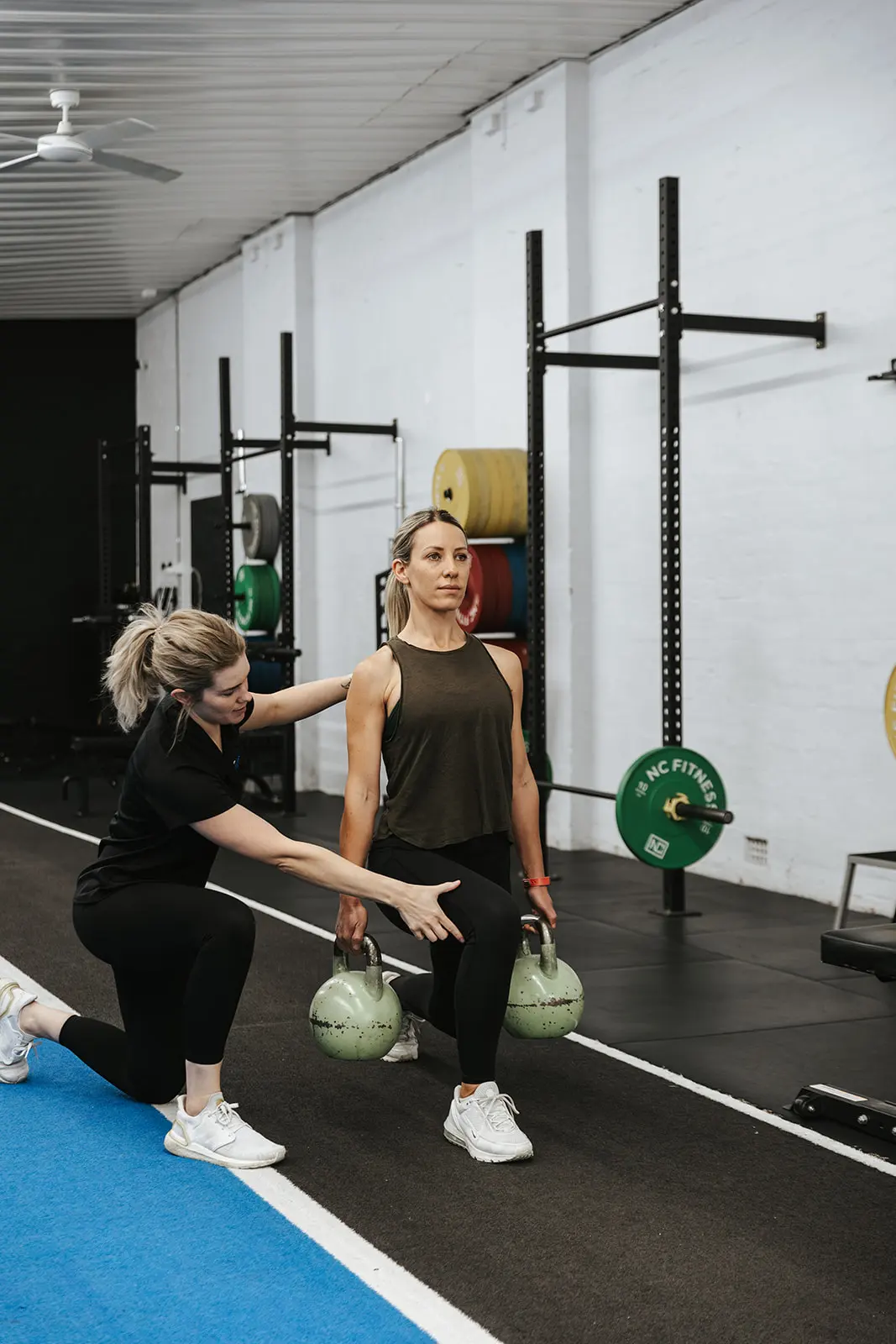
What’s Generally Safe to Keep Doing
Completely stopping movement often leads to more stiffness, reduced strength, and a longer recovery timeline. Instead, the focus should be on continuing to move in ways that your hip tolerates well.
Low-impact activities like walking, cycling, or swimming can be helpful, but they are not automatically beneficial in every situation.
Walking, for example, can aggravate symptoms if your stride is too long or if you are frequently walking on inclines. Small adjustments like shortening your stride length or reducing hills can make a noticeable difference.
Strength training is one of the most effective tools for managing hip pain, provided it is approached correctly.
Controlled, moderate-range exercises tend to be well tolerated. Movements like glute bridges, sit-to-stands, step-ups, and light Romanian deadlifts can help build capacity in the muscles that support the hip.
The key is not to avoid exercise, but to modify it. Adjusting depth, load, speed, or volume allows you to stay active while respecting your current limits.
What to Be Careful With When You Have Hip Pain
There are certain patterns that tend to aggravate hip pain, particularly when the joint is already sensitive.
Deep hip flexion under load is one of the most common triggers. This includes deep squats, low lunges, and prolonged sitting in low positions.
These movements can place compressive forces on the hip joint that may not be well tolerated at the moment. This does not mean you need to eliminate these movements permanently. It simply means reducing the range for now and gradually reintroducing it as your tolerance improves.
Sharp, catching, or pinching pain during movement is another clear signal to pay attention to. Unlike a mild ache that warms up, these sensations often indicate that the movement or load is not appropriate at that time.
Another major factor that is often overlooked is sudden increases in training load. Rapid changes in how often you train, how intensely you train, or how much weight you lift can significantly increase the risk of injury. Gabbett (2016) highlights that spikes in training load are strongly associated with injury risk, even in otherwise healthy individuals.
Your hip is generally capable of adapting to load, but it needs time and consistency to do so. Passive strategies like stretching, foam rolling, or massage can provide short-term relief, but they rarely address the underlying issue on their own.
Without building strength and improving load tolerance, symptoms often return.
Book Online Now to Help Your Body
A Smarter Way to Approach Training with Hip Pain
A useful way to think about managing hip pain is through three phases: calming symptoms, building capacity, and returning to full activity.
The first phase focuses on reducing aggravating movements while keeping you active in a modified way. This might involve reducing depth in certain exercises or temporarily avoiding specific positions that trigger pain.
The second phase is where the real progress happens. Gradually introducing strength work helps improve the capacity of the hip and surrounding muscles. This phase requires consistency and patience, rather than constant variation.
The final phase involves returning to higher-level or previously painful activities, with a focus on gradual progression and monitoring how your hip responds.
This structured approach is often where physiotherapy guidance can make a significant difference.
Book Online Now to Manage Your Pain
When to Seek Physiotherapy Advice for Hip Pain
Many people wait until pain becomes severe before seeking help, but earlier intervention is usually more effective. If your hip pain has persisted for more than one to two weeks, is limiting your activity, or keeps returning despite rest, it is worth getting it assessed.
A physiotherapist can help identify the underlying cause, guide you on what to continue and what to modify, and provide a structured plan to keep you progressing.
If you find yourself constantly questioning whether an exercise is helping or making things worse, that uncertainty alone is a good reason to seek guidance.
Book Online Now to Help Your Body
Final Thoughts on Training with Hip Pain
Hip pain does not mean you need to stop training.
It does mean you may need to change how you train, at least for a period of time.
The goal is not to avoid movement, but to build a stronger, more resilient hip that can tolerate the demands you place on it. That process involves understanding your limits, progressing gradually, and making informed adjustments along the way.
If you are unsure where to start, or if your progress has stalled, speaking with a physiotherapist can help you move forward with clarity and confidence.
Book online today to feel great & move well again!
Super Simple with Instant Confirmation & No Login Required!
For consultation fees and more information, please visit our Fees and FAQs page or call us on 03 9498 0205.
Some types of consultations may require pre-payment or a deposit. 100% Money Back Guarantee (T&Cs apply).
Learn how our Melbourne Sports Physio team can help you?
At Melbourne Sports Physiotherapy our goal is to get you moving pain free as soon as possible.
But, we also want you to actually move better and live a healthier, more active and fulfilling life!
If your sports, fitness training or work has been wearing your body down, book in with one of our expert massage therapists so we can help you reduce your pain or stiffness.
If you are showing some signs of this condition or simply want help prevent this from happening in the future then book in with one of our highly experienced Remedial Massage Therapists today!
You can make an appointment by calling or booking online.