


May 2026
Sam Younghusband, Physiotherapist
Top 5 Knee Injuries Treated by Physios in Melbourne (And How to Recover Fast)
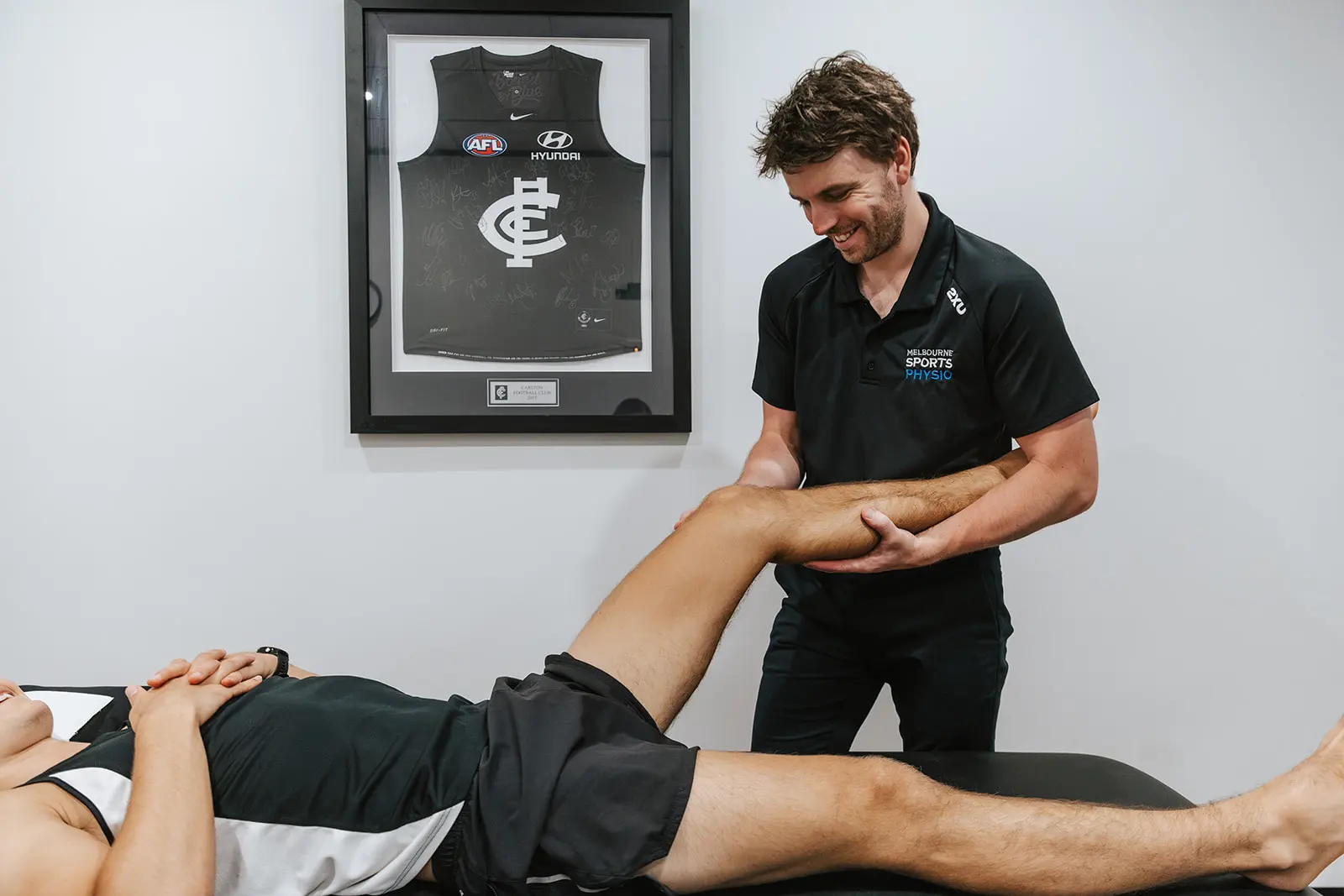
It often starts with something small.
A slight ache after a run. A sharp twinge walking downstairs. That annoying stiffness after sitting at your desk for too long. Or maybe your knee gave way suddenly during sport and you knew straight away something wasn't right.
However it started, knee pain has a way of creeping into everything — your training, your work, your sleep. And if you've been waiting for it to sort itself out, you're probably reading this because it hasn't.
The good news? Most knee injuries respond really well to the right treatment. Here are the five we see most often in Melbourne, and what actually helps.
Book Online Now to Fix Your Body
1. ACL Injuries
The ACL is the ligament deep inside your knee that keeps everything stable when you twist, pivot, or change direction. It's the injury athletes dread most — and it usually happens fast.
One moment you're moving normally, the next there's a pop, your knee swells up, and suddenly you're not sure it'll hold your weight. It's a confronting experience.
Here's what surprises most people: surgery isn't always necessary. For some ACL injuries, a structured rehabilitation program produces results just as good — or better — than going under the knife. And for those who do need surgery, the physio work you do before and after makes a huge difference to how well you recover.
Rehab focuses on rebuilding stability, strengthening the muscles around the knee, and gradually reintroducing the movements your sport or lifestyle demands. It takes time — usually nine to twelve months for a full return to sport — but with the right approach, most people get there.
What our clients are saying about us
2. Meniscus Injuries
Think of the meniscus as your knee's built-in shock absorber. You've got two of them sitting inside the joint, and they can be injured through a sudden twist or simply worn down over time.
Common signs include clicking or locking sensations, pain along the joint line, swelling, and discomfort when squatting or twisting. Some people also describe a feeling of the knee catching or giving way.
One thing worth knowing: scans regularly show meniscus tears in people who have absolutely no pain. So while imaging has its place, it doesn't tell the whole story — and it shouldn't automatically lead you toward surgery.
Many people manage meniscus injuries really well with physio alone. The focus is on strengthening the muscles around the knee, improving how you move, and settling irritation in the joint. Get the right assessment first and you'll have a much clearer picture of what you're actually dealing with.
3. Patellofemoral Pain Syndrome (Runner's Knee)
This one's incredibly common — and it affects far more people than just runners.
Patellofemoral pain is that aching, sometimes sharp pain around or behind the kneecap. It tends to flare during running, squatting, stair climbing, lunges, or even just sitting for long periods. Runners get it, gym-goers get it, cyclists get it, teenagers get it, office workers get it.
Here's the thing though — the problem often isn't just the knee.
Physiotherapists regularly find that weak hips, poor foot control, or faulty movement patterns are placing extra stress on the kneecap. If you only treat the knee, you miss what's actually causing the problem.
A good treatment plan looks at the full picture: hips, ankles, movement quality, and training load. Get on top of it early and it responds well. Leave it too long and you start compensating in ways that create a whole new set of problems.
4. Patellar Tendinopathy (Jumper's Knee)
Pain just below the kneecap that's worst during jumping, running, or explosive movements? That's likely the patellar tendon letting you know it's been pushed too hard.
Jumper's knee is common in basketball players, volleyballers, and anyone doing a lot of high-impact training. It usually develops gradually — often after a sudden increase in training load — and has a habit of becoming persistent if you try to push through it.
The biggest misconception here is that rest will fix it. It won't.
Tendons need to be progressively loaded to heal properly. The rehab process starts gently — often with isometric exercises that reduce pain without aggravating the tendon — and builds steadily toward heavier loading, then plyometrics, then full return to sport.
It takes patience. But skip steps and you'll be back at square one within weeks.
Book Online Now to Fix Your Body
5. Knee Osteoarthritis
Not everyone dealing with knee pain is a weekend warrior or competitive athlete. Knee osteoarthritis is one of the most common conditions we treat, particularly in people over fifty — and it's more manageable than most people expect.
Osteoarthritis involves gradual wear and tear of the cartilage inside the joint. It can cause morning stiffness, swelling, aching during walks, and difficulty with stairs. Some days are better than others, and it can feel like a bit of a moving target.
The biggest myth? That exercise makes it worse.
It doesn't. Research consistently shows that appropriate exercise is one of the most effective treatments available for knee osteoarthritis — often more effective than medication. Movement, when guided properly, reduces pain, improves function, and keeps the joint healthier for longer.
Physio for osteoarthritis focuses on building strength, improving mobility, and helping you move in ways that reduce unnecessary stress on the joint. It won't reverse the condition, but it can make a genuinely meaningful difference to how you feel and what you're able to do.
So What Does Knee Rehab Actually Look Like?
Every knee injury is different, and good physiotherapy reflects that. But most programs move through similar stages:
Settling things down. Before anything else, we need to reduce pain and irritation. That might mean modifying your activity, managing swelling, or adjusting what's loading the knee.
Getting movement back. Stiffness is almost always part of the picture after a knee injury. Mobility work, stretching, and hands-on treatment help restore how the joint moves.
Building strength. This is where most of the real work happens. Strengthening the quads, hamstrings, hips, and calves takes pressure off the knee and protects it going forward.
Returning to what you love. Whether that's running a marathon, playing footy on weekends, or just getting through a day at work without limping — the final stage of rehab is about preparing your knee for real life, not just the clinic.
Book Online Now to Fix Your Body
How Long Will It Take?
Honestly, it depends on the injury — but here's a rough guide:
-
Mild overuse or irritation: 2–6 weeks
-
Tendon pain: 6–12 weeks
-
Meniscus rehab: A few weeks to a few months
-
ACL rehab: 9–12+ months
-
Osteoarthritis: Ongoing management with long-term exercise
The most important thing to know: pain easing doesn't mean you're done. That's actually when a lot of people stop their rehab — and then wonder why it came back.
Why It's Worth Sorting Sooner Rather Than Later
Knee pain has a way of becoming a bigger deal the longer you leave it. The body adapts — you start moving differently to protect the sore spot, other areas pick up the load, strength quietly drops off, and what started as a minor issue turns into something much more stubborn.
Getting on top of it early almost always means a faster recovery and a better outcome. It really is that straightforward.
Book Online Now to Fix Your Body
Think We Can Help?
If knee pain has been holding you back — from training, from work, or just from getting through the day comfortably — we'd love to help you figure out what's going on and put a proper plan in place.
A thorough assessment, a clear diagnosis, and a program built around your specific goals. That's where recovery starts.
Get in touch and let's get your knee sorted.
Book online today to feel great & move well again!
Super Simple with Instant Confirmation & No Login Required!
For consultation fees and more information, please visit our Fees and FAQs page or call us on 03 9498 0205.
Some types of consultations may require pre-payment or a deposit. 100% Money Back Guarantee (T&Cs apply).
Learn how our Melbourne Sports Physio team can help you?
At Melbourne Sports Physiotherapy our goal is to get you moving pain free as soon as possible.
But, we also want you to actually move better and live a healthier, more active and fulfilling life!
If your sports, fitness training or work has been wearing your body down, book in with one of our expert massage therapists so we can help you reduce your pain or stiffness.
If you are showing some signs of this condition or simply want help prevent this from happening in the future then book in with one of our highly experienced Remedial Massage Therapists today!
You can make an appointment by calling or booking online.